PEMF and red light, in plain words
How MagnaWave PEMF and red light sessions work
No drugs, no needles, no hauling. I bring the MagnaWave and the red light to your barn, fair pen or yard, and your animal gets a calm wellness session that supports relaxation, comfort and circulation.
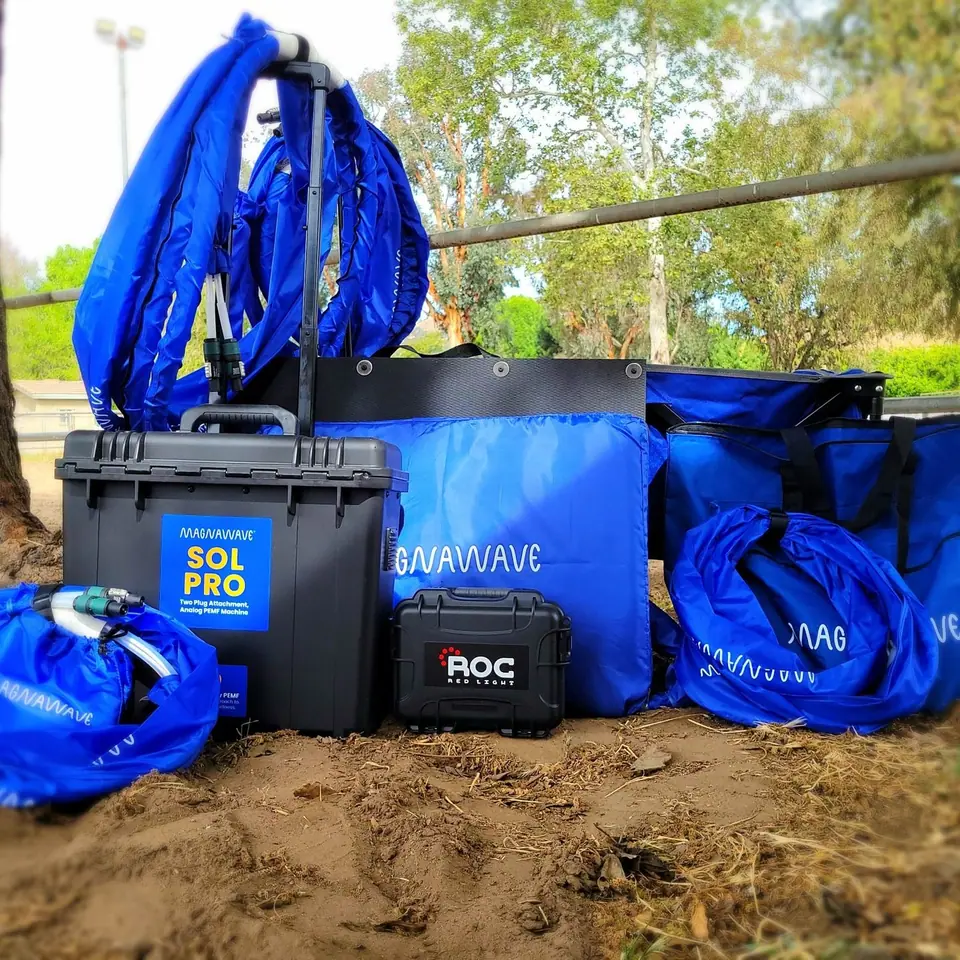
- MagnaWave SOL Pro
- ROC red light
- Alongside your vet
MagnaWave PEMF
Gentle pulses, one calm session
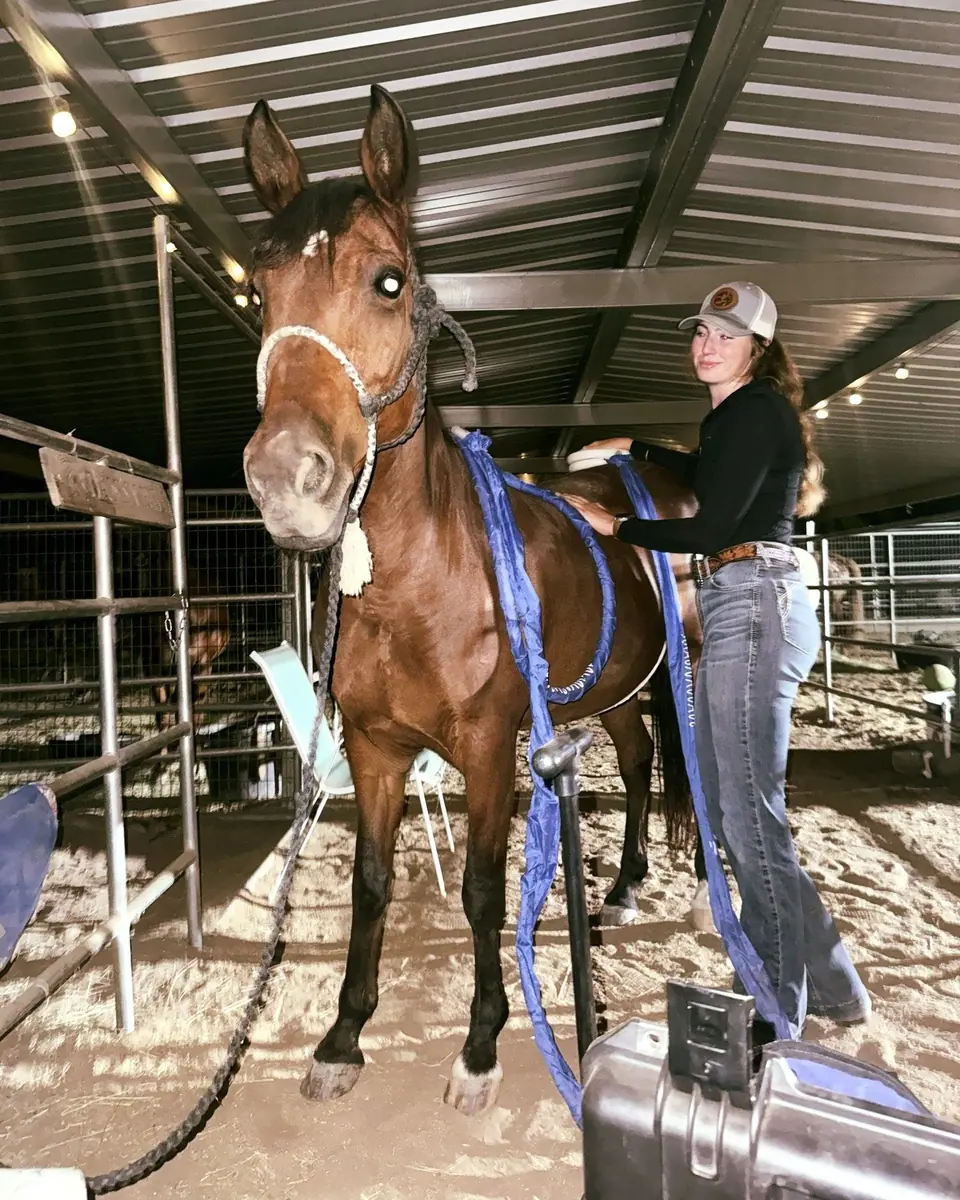
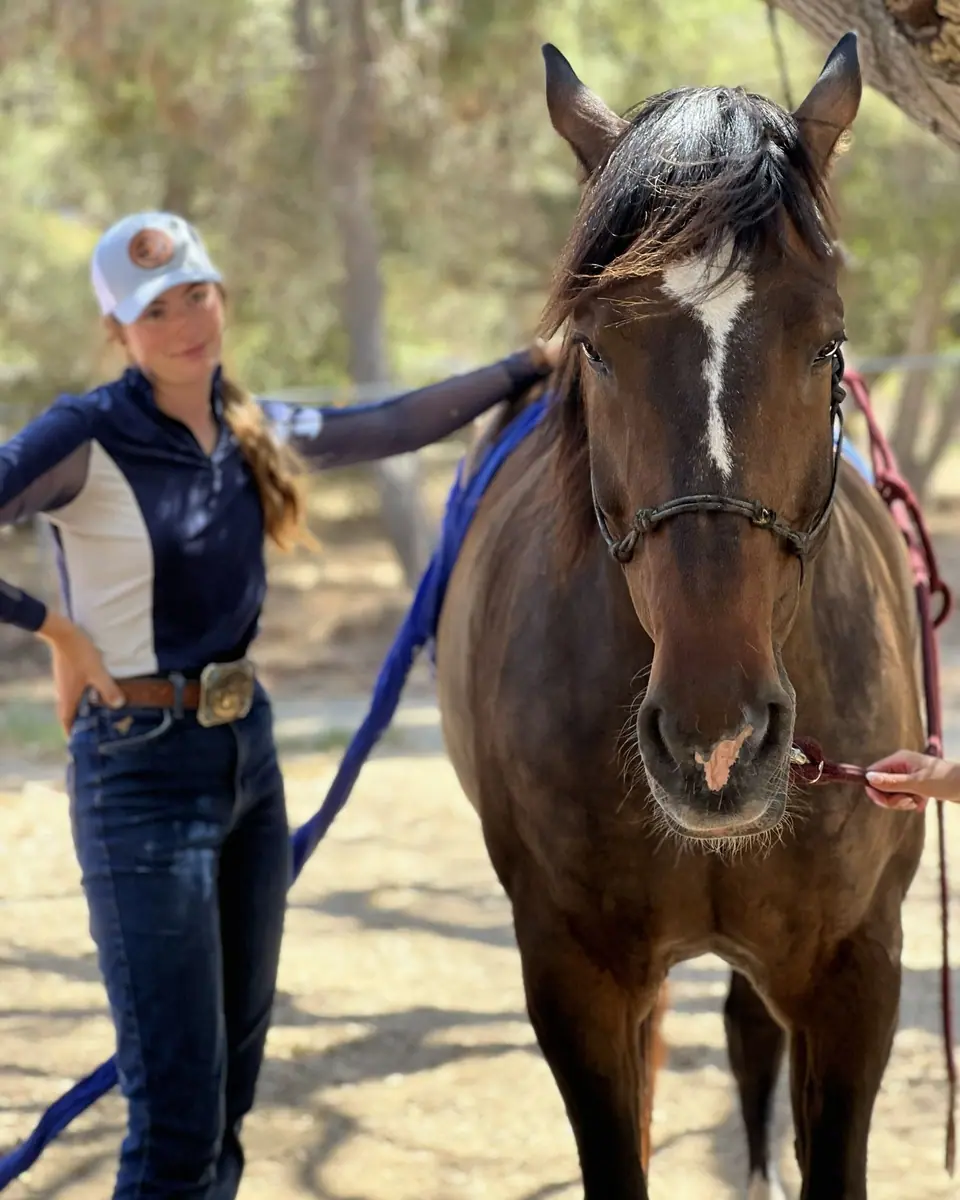
PEMF stands for pulsed electromagnetic field. I use the MagnaWave SOL Pro, which sends gentle pulses through a loop or pad placed on or around your animal's body.
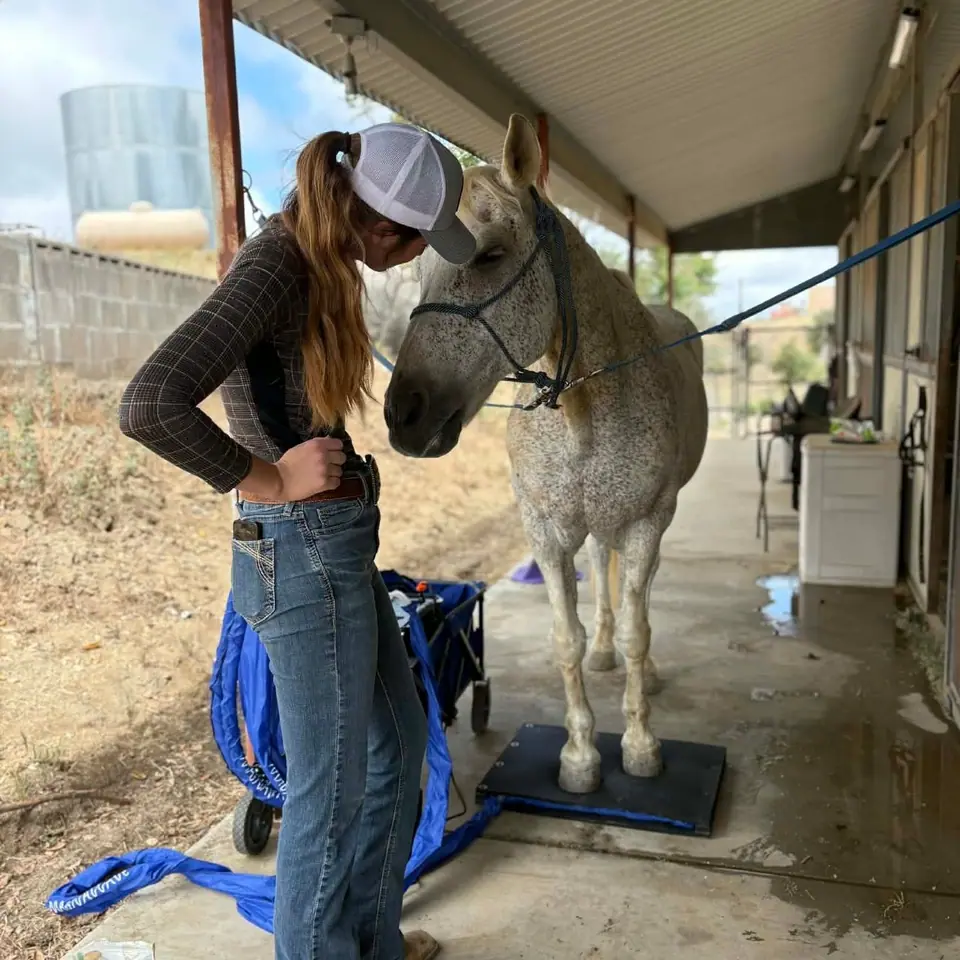
Most animals stand quietly, soften, lick and chew, and plenty doze off before we're done.
Every session starts with a slow head-to-tail scan using the Butterfly Loop. I'm watching for small muscle twitches that show me where your animal might be holding everyday tension. Then I spend the session where it's needed.
- Butterfly Loop for the first scan, every single session
- Large Loop, my most versatile tool
- XL Wave Wings, a 24-inch double loop for bigger areas
- Zoom Paddle, a handheld attachment
- Mag Energy Mat with its Mat Guard
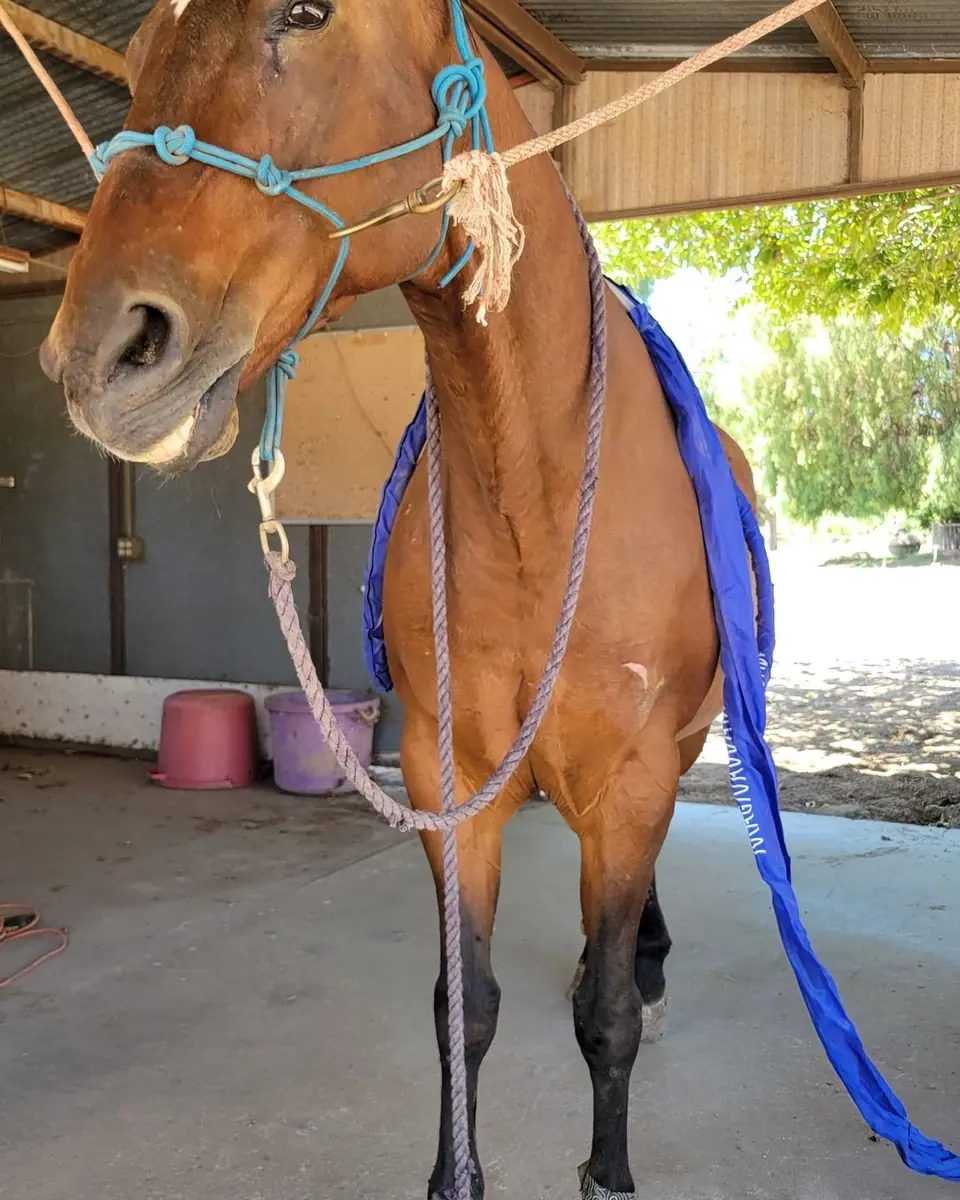
Why does my animal twitch sometimes?
Small twitches and ripples in the muscle are a normal response to the pulses. They often show me where your animal is holding tension, so I may spend a little longer there. Twitching isn't needed for a good session, though. Plenty of animals stay perfectly still and simply relax.
ROC red light
Focused light for legs, backs and busy spots
The ROC is a cordless red light that combines red and near-infrared light. I hold it on the areas that work hardest: lower legs, backs, shoulders and hindquarters.
It's shielded, so I can use it right alongside the MagnaWave in the same visit. Applications are quick and targeted, so it fits easily into a visit.
Add red light to any 30-minute session for $10, or book a 30-minute red light session on its own.
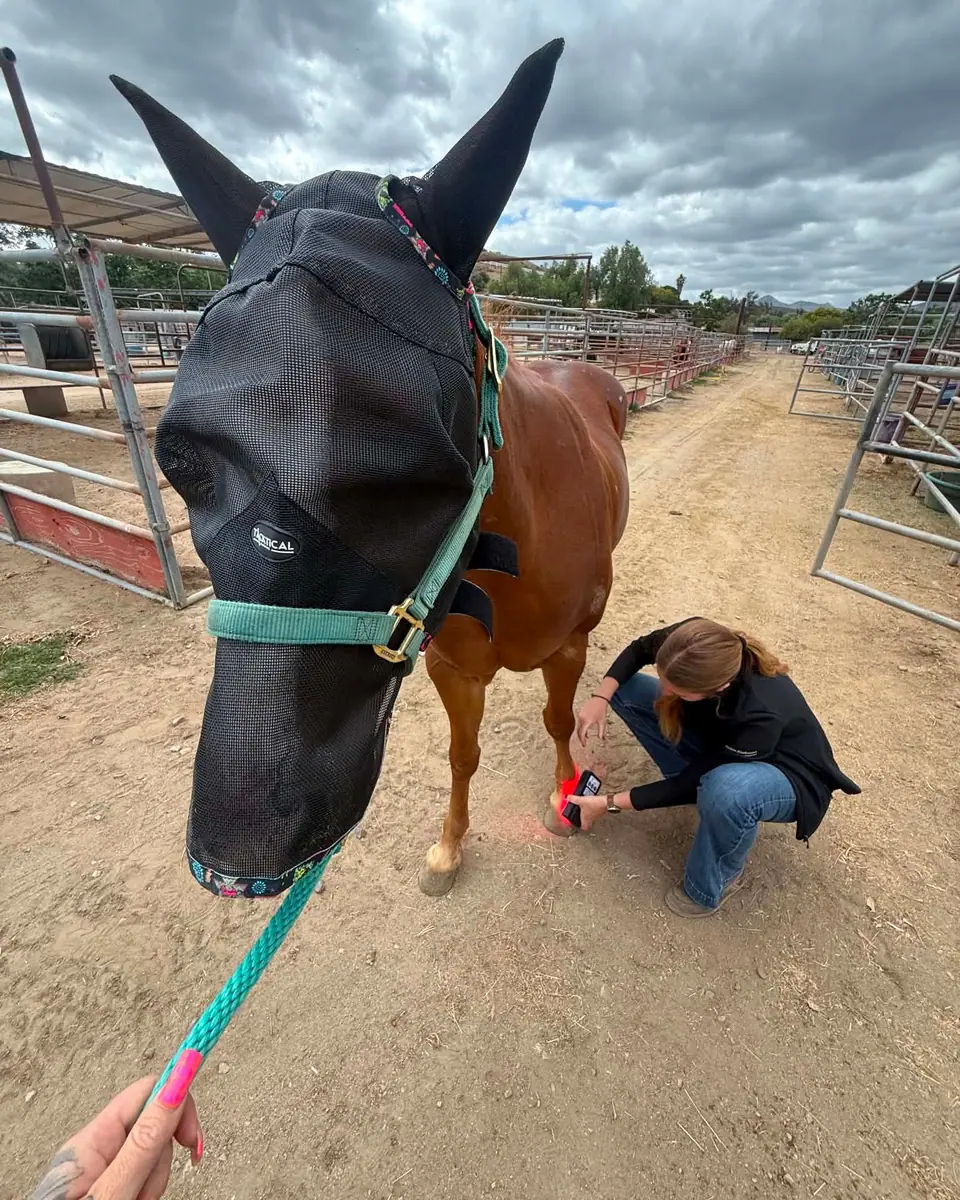
Why I pair them
Two tools that work well together
The MagnaWave covers the whole body. The red light gives extra attention to the places that carry the load. Together they make one unhurried session that supports relaxation, comfort and circulation between rides, hauls and shows.
Whole-body PEMF
Gentle pulses from head to tail, with extra time where your animal is holding tension.
Focused red light
Short, targeted applications on legs, backs and any spot you've asked me to look at.
Time to settle
We let your animal soak it in. Many lick, chew, yawn and drop their head before I pack up.
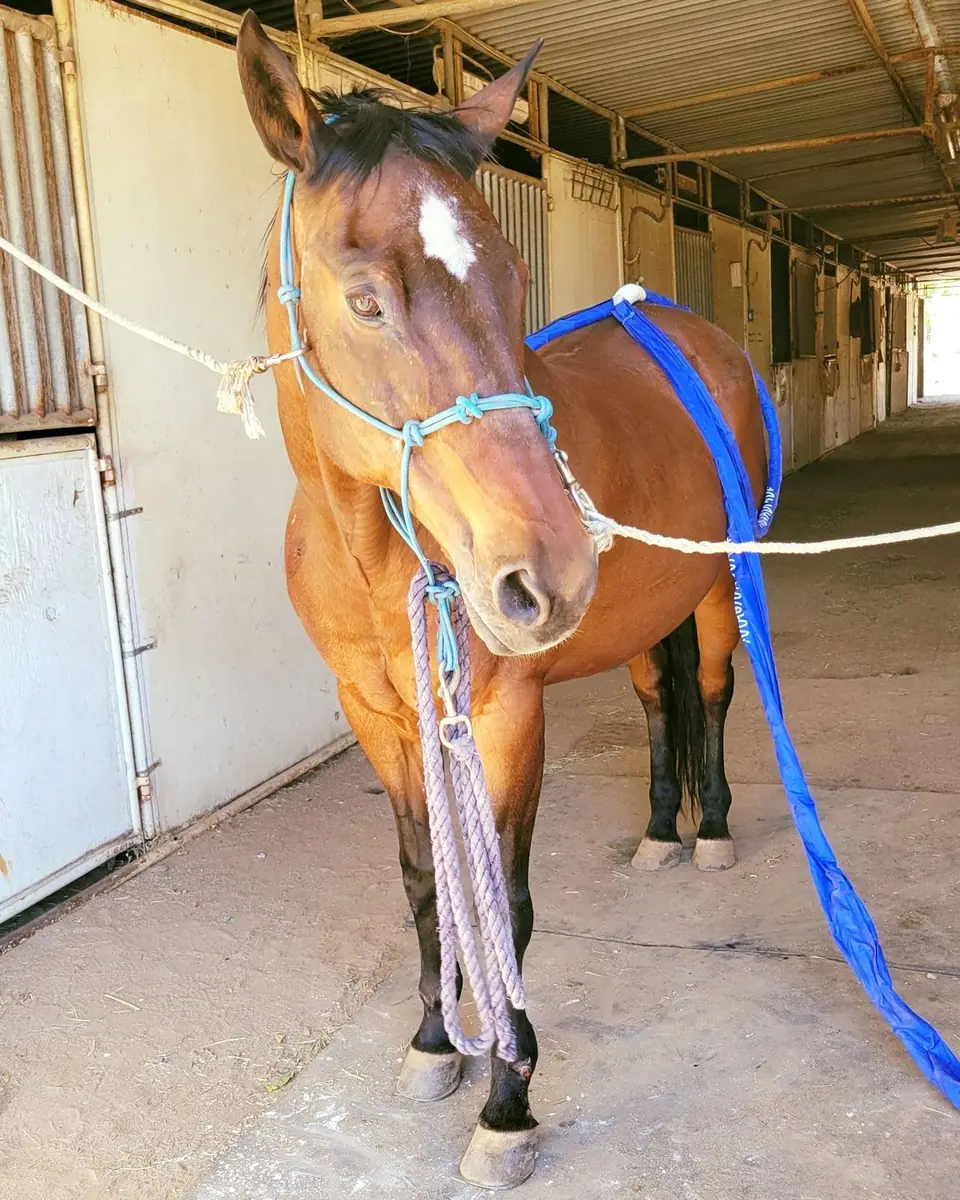
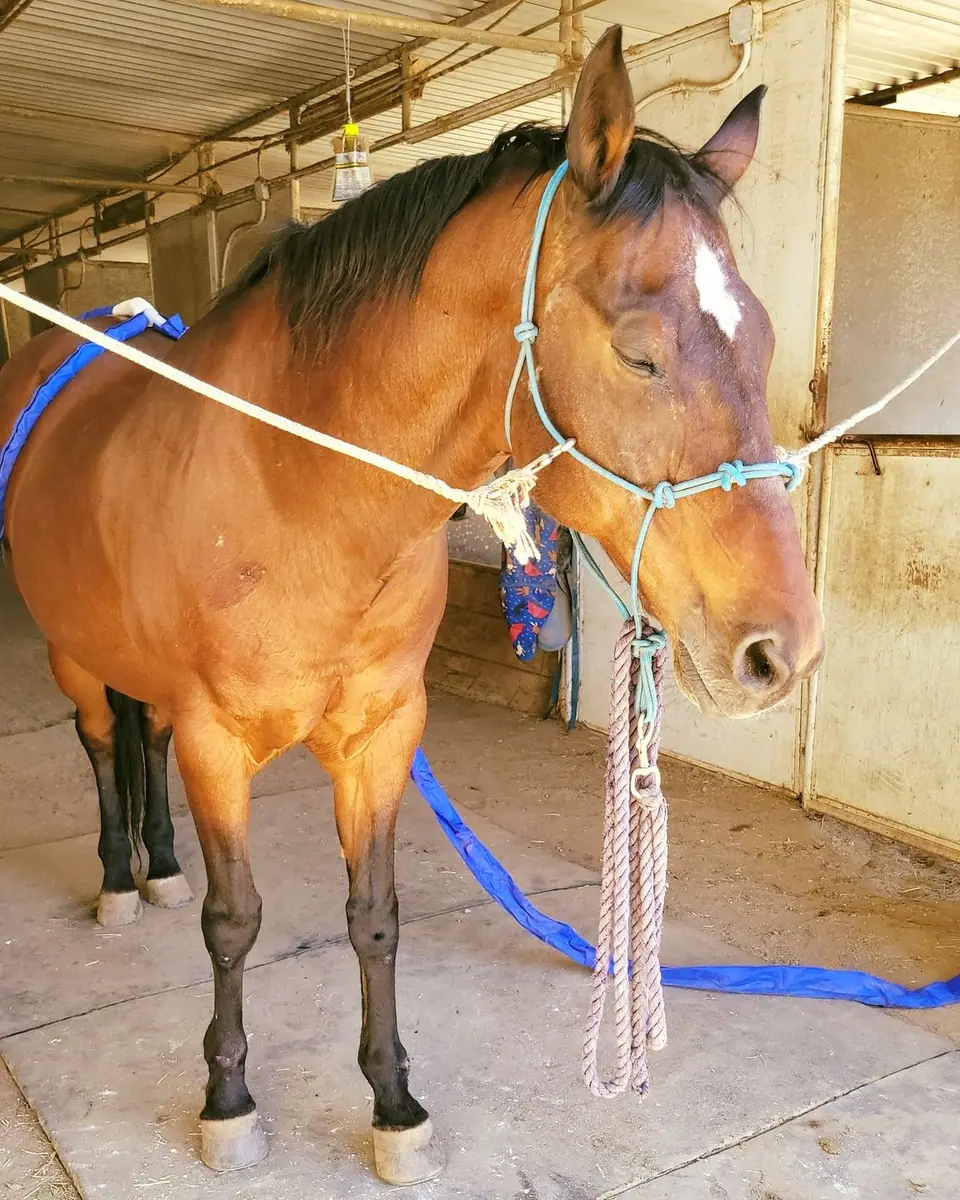
What you'll see during a session
The moment the tension lets go
The horse takes a deep breath. Their head drops. Their eyes go soft. That moment is why I do this work. Here's what owners usually notice:
- Softer eyes and a quieter expression
- Ears settling and turning back toward me
- Licking and chewing
- A deeper, slower breath
- The head lowering, sometimes almost to the ground
- Shifting weight or resting a leg
- Curiosity: a nose on the loop, or a look back to see what I'm doing
Every animal is different. Some show all of these, some show one or two, and some just quietly enjoy it.
A question I hear a lot
Is MagnaWave the same as blankets and boots?
Similar idea, different delivery.
Magnetic blankets and boots and the MagnaWave both work with magnetic fields. The difference is in how the pulses are delivered and how much power is behind them.
The MagnaWave is a stronger machine run by a trained practitioner, so sessions are shorter and I can adjust everything to your animal as we go: where the loop sits, how strong it is and how long we stay in one place.
Working with your vet
I work alongside your veterinarian
I'm not a veterinarian, and I don't diagnose.
My sessions are a wellness service for healthy, working animals. They're not a substitute for veterinary care.
If your animal is injured, lame, ill or under treatment, I'll ask for your vet's OK before we book. Your vet can use the MagnaWave Veterinarian Referral Form below.
Questions
What owners ask me
Anything not covered here? Send me a message and I'll get back to you.
How often should my animal have a session?
It depends on their work and routine. Some horses have a session monthly, some every two weeks, and some weekly during a busy stretch. Whatever your animal needs. Think of it less like a one-time fix and more like a wellness routine. We'll work out a rhythm together after the first visit.
How long does a session take?
A horse session is 30 to 45 minutes, or 60 minutes for a longer session. Show livestock run from about 10 minutes for poultry to 30 to 45 minutes for cattle. Dogs are 25 minutes, and targeted sessions are 15 minutes. Please allow a little extra time on top for settling in and talking things through.
Is it safe and comfortable for my animal?
Sessions are gentle and non-invasive: no drugs and no needles. I start slowly, watch your animal the whole time and adjust the intensity to what they're comfortable with. Most animals soften, lick and chew, and some doze off. If your animal is injured, lame, ill or under veterinary care, I'll ask for your vet's OK first.
Will my animal twitch during a session?
Sometimes. Small muscle twitches are a normal response to the pulses, and they often show me where an animal is holding everyday tension. Twitching isn't needed for a good session, though. Plenty of animals stay completely still and just relax.
Can my horse be ridden after a session?
Most horses go straight back to their normal routine. Some come out of a session very relaxed and sleepy, so an easy day afterward is a nice idea if you can. Tell me your riding and show schedule and we'll plan the session around it.
What do I need to have ready?
A quiet, safe spot such as the barn aisle, a stall, the paddock or the fair pen. Your animal in a halter or on a lead, with someone to hold them if they don't tie well. A dry coat. And a signed release form, which you'll find on the Book page.
Do you need power at the barn?
No. I bring my own portable power station, so sessions can happen wherever your animal is, with or without an outlet nearby.
Can show animals have a session before a show?
Yes. You can book a session in the days before a show to help your animal settle, and another afterward to help them unwind from the hauling and the ring. Some shows have rules about what can happen before showing, so please check your show's rules and I'll plan around them.
How many sessions will my animal need?
There's no set number. What makes the difference is consistency more than intensity, so regular sessions between rides, hauls and shows tend to fit best. If you'd like to plan ahead, buy four sessions and your fifth is free.
Ready when your animal is.
Pick a time that suits you and I'll come to your barn, fair pen or yard. Questions first? Send me a message and I'll get back to you.